For most New England homes, a good double pane window is enough. Triple pane is worth it in the rooms where you feel the cold. A third pane lowers the U-value, keeps you more comfortable near the glass and resists winter condensation. With us, the Harvey step is the Classic at $617 to the Homerun at $699. The Gentek step is the Series 3000 at $587 to the Series 9000 at $683.
Here is what the numbers mean, what the extra pane can and cannot fix, and where we would spend the money in your house.
U-Value In Plain English
U-value (also called U-factor) measures how fast heat escapes through a window. The National Fenestration Rating Council says the lower the number, the better a window keeps heat in. Its ratings typically run from 0.20 to 1.20, and they appear on the NFRC label on new windows.
The U.S. Department of Energy lists the features that bring the number down. They include two or more panes, low-e coatings and argon or krypton gas between the panes. Frames built from materials such as vinyl help too. The Department of Energy notes that a third pane creates two insulating spaces instead of one. NFRC calls triple-glazed windows the most efficient.
ENERGY STAR says that in the North you are generally looking for a U-factor of 0.22 or lower. Our two triple-pane double hungs meet that: the Harvey Homerun at .18 and the Gentek Series 9000 at .22. Our best-selling Harvey Classic, a double pane, is rated .24.
Two more numbers on the NFRC label are worth a look in a cold climate. Condensation Resistance shows how well a window resists sweating, and higher is better. Air Leakage shows how much air comes through the product itself. Ask to see the ratings for the exact model and glass you are quoted. The same window can come with different glass packages.
What A Third Pane Does And Does Not Do
It keeps you warmer near the glass. NFRC’s consumer guide says efficient windows shrink the temperature gap between the glass and the rest of the house. When that gap is too large, cold air forms near the window and drops to the floor as a draft.
It resists winter condensation. Condensation forms when the window’s inside surface is colder than the indoor air, and NFRC notes it can lead to mold and mildew. NDSU Extension gives a useful benchmark at 40 percent indoor humidity. Double-pane glass should start to show condensation when it dips below zero outside. Triple glazing should hold out until closer to minus 40 F.
It can cut outside noise. A study cited by Pacific Northwest National Laboratory found thin triple-pane windows reduced sound by about 8 to 10 decibels. That roughly halves the noise you perceive. The comparison home had double-pane metal-frame windows, so the gap against a new vinyl double pane may be different.
It does not fix air leaks. A third pane slows heat through the glass, not air through gaps around the frame. NFRC points to weatherstripping and caulking for that, and so does a careful installation.
It does not replace humidity control. NDSU’s numbers show that even triple glazing has a limit. NDSU suggests about 40 percent humidity in winter and bathroom and kitchen fans that vent outdoors.
It adds weight. PNNL reports that triple-pane windows can be 25 to 50 percent heavier than similar double-pane windows. Berkeley Lab notes that conventional triple pane has needed wider, heavier frames. In a double hung, that means a heavier sash to lift and tilt.
The Cost Difference With Our Prices
Triple pane costs more, and the Department of Energy says cost is one reason it has been slow to catch on. Here is the step up in our own lineup, installed, for a white double hung with basic installation:
| Pair | Double Pane | Triple Pane | U-Value |
|---|---|---|---|
| Harvey | Classic $617 | Homerun $699 | .24 to .18 |
| Gentek | Series 3000 $587 | Series 9000 $683 | .28 to .22 |
Two things stand out. The Harvey step is the smaller one, and it lands at the lower U-value. And the Homerun at $699 costs only a little more than the Series 9000 at $683 and gets a lower U-value. We call it our best value. Grids and colors add to any of these prices.
For a whole-house budget, see our New Hampshire window cost guide or the Massachusetts cost guide. Our financing guide explains 0% for 18 months through Synchrony (rates and terms depend on qualifying credit).
When Triple Pane Is Worth It
Here is how we would decide, opening by opening:
- Rooms you sit in on winter nights. Living rooms, home offices and bedrooms gain the most from warmer glass.
- North-facing and windy walls. These openings run coldest, so the lower U-value earns its keep.
- Homes that fight winter condensation. If your glass sweats every January, triple pane gives you more margin.
- Bedrooms near a busy road. Noise is a fair reason to pay for the third pane.
- A house you will stay in for years. The per-window premium is paid once; the comfort lasts.
Double pane is the honest call for rooms you rarely use, a home you will sell soon, or a tight budget. The Harvey Classic, at .24, is our best seller for good reason. A sensible mix is triple pane on the cold side of the house and double pane everywhere else.
Frequently Asked Questions
Are triple pane windows worth it in New Hampshire?
In the rooms you use most on winter nights, often yes. With us the step up is from the Harvey Classic at $617 to the Homerun at $699. On the Gentek side, it is the Series 3000 at $587 to the Series 9000 at $683.
What U-value should I look for in New England?
ENERGY STAR says that in the North you are generally looking for a U-factor of 0.22 or lower. Our Harvey Homerun is rated .18 and our Gentek Series 9000 is rated .22.
Do triple pane windows stop condensation?
They resist it but do not stop it. NDSU Extension says that at 40 percent indoor humidity, double pane starts to show condensation below zero. Triple glazing holds out until closer to minus 40 F.
Are triple pane windows harder to open?
They are heavier. PNNL reports triple-pane windows can be 25 to 50 percent heavier than similar double-pane units. Try lifting a sample sash at your in-home quote.
Does a third pane make a window quieter?
It can. A study cited by PNNL found thin triple-pane windows cut sound by about 8 to 10 decibels against double-pane metal-frame windows. That is roughly half the perceived noise.
The easiest way to decide is to walk the house with someone who measures windows for a living. Our free in-home measure covers every opening, and we will tell you plainly where triple pane is worth it and where it is not. You get a written quote and no pressure. Use the form below or call (603) 764-7212.
Sources
- National Fenestration Rating Council: what the label ratings mean.
- NFRC Efficient Windows: Condensation.
- NFRC Efficient Windows: Control and Comfort.
- NFRC Efficient Windows: Window Types and Parts.
- ENERGY STAR: High Performing Windows or Storm Windows.
- U.S. Department of Energy, FEMP: Purchasing Energy-Efficient Residential Windows, Doors, and Skylights.
- U.S. Department of Energy: BTO Seeks to Increase Adoption of Energy-Saving Triple-Pane Windows.
- Pacific Northwest National Laboratory: How Triple-pane Windows Stop Energy (and Money) From Flying Out the Window.
- Berkeley Lab: New Thin-Triple Glass Could Open Window of Opportunity for Energy Savings and Jobs.
- NDSU Extension: Window Condensation Common Problem.
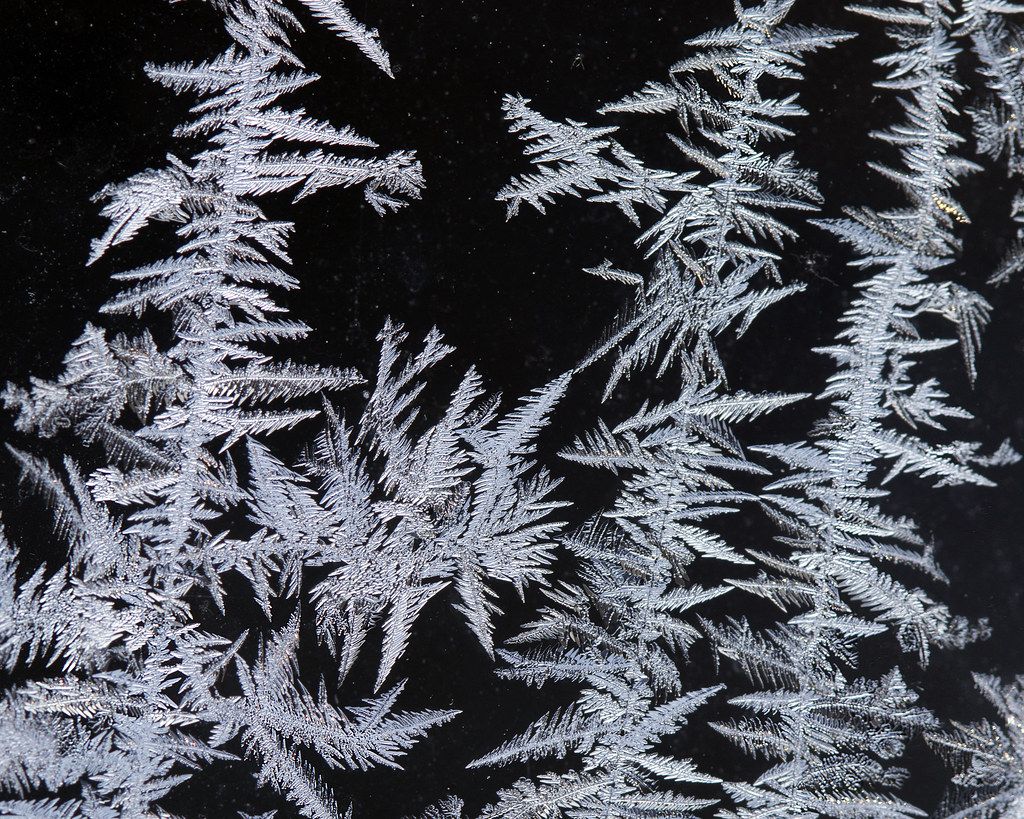
Header photo: frost on window by watts_photos, licensed CC BY 2.0, via Flickr.