For most New England front doors, fiberglass is the better pick. It won’t dent or rust, it can pass for real wood, and it insulates about as well as steel. Steel is still a sound, lower-cost choice for a plain door that takes little abuse, like the door from the garage into the house.
Below is the fair comparison we give homeowners at the kitchen table, sourced from the manufacturers and building-science pages listed at the end. We install fiberglass entry doors, so we’ll tell you where that bias matters and where it doesn’t.
Fiberglass Vs Steel At A Glance
| Fiberglass | Steel | |
|---|---|---|
| Insulation | Foam core, roughly R-5 to R-6 for an insulated slab without glass | Foam core, roughly R-5 to R-6 for an insulated slab without glass |
| Dents | Resists dents | Can dent and bow under impact |
| Rust | Won’t rust | Can rust where the skin is scratched or hit with salty splashback |
| Looks | Smooth paintable skins or realistic oak, mahogany and fir grains | Usually a smooth or embossed painted skin; wood grain is harder to fake |
| Upkeep | Wash with mild soap; factory finishes carry their own warranty | Touch up scratches before they rust |
| Security | Strong, with reinforced lock areas and optional multi-point locks | Strong, and a solid value for the money |
| Best fit | Front and side entries that face weather and get looked at | Garage-to-house doors and budget-first openings |
Both materials are good doors when they are hung square and sealed well. The differences show up over years of weather, salt and slammed groceries.
Insulation And Energy Use
This is the category where steel gets sold short. An insulated steel door and a fiberglass door both get most of their warmth from a foam core, not from the skin. Building-science writer Martin Holladay puts insulated steel and fiberglass doors in the same range, about R-5 to R-6, roughly double a solid wood door.
Therma-Tru says its Smooth-Star fiberglass door has up to four times the insulating R-value of wood. Harvey uses a CFC-free, high-density polyurethane foam core. Those are real advantages over wood. Against a foam-core steel door, though, the slab itself is close to a tie.
What changes your heating bill more is everything around the slab:
- Glass. ENERGY STAR sets its door criteria by how much glass a door has, so a full-lite door and a solid door are judged differently. The R-5 to R-6 figures above are for doors without glass.
- Weatherstripping and fit. The Department of Energy lists doors that don’t close tightly among common air leaks. Weatherstripping doors is on its short list of fixes.
- Feel. Therma-Tru notes that a steel skin passes heat and cold straight through, so it can feel icy on a January morning. Fiberglass stays closer to room temperature to the touch.
Glass quality matters too. Therma-Tru builds the insulated glass in its doors to keep the inner pane as warm as possible, which cuts down on condensation. Ask what glass comes in any door you are pricing, whatever the skin.
So if energy is your main reason for a new door, ask about the glass and the weatherstripping before you worry about the skin.
Dents, Rust And Maintenance In A New England Winter
Here fiberglass pulls ahead, and our weather is the reason. Therma-Tru’s Smooth-Star page says plainly that fiberglass will not dent or rust like steel. Steel dents from impact and can bow under force, and a scratch through the paint is where rust starts.
Road salt makes it worse. Holladay warns that a steel door hit by splashback mixed with rock salt will eventually rust. That’s why he prefers fiberglass for exposed doors. Think of a front door at the bottom of a step that gets shoveled and salted all winter.
Upkeep on fiberglass is light. Therma-Tru says its fiberglass doors clean up with household detergent and water. Harvey’s fiberglass doors can come pre-finished in Sherwin-Williams paint or stain colors, and those factory finishes carry a 10-year warranty. Harvey’s fiberglass skins are also built to resist splintering, denting, warping, rotting and rusting.
Steel is not high maintenance either. It mostly asks you to catch scratches and dings early and touch them up. On a door that rarely gets bumped, that is a small job.
Many New England homes also add a storm door. Therma-Tru says a properly installed and properly vented storm door will not void its door system warranty. If you plan to keep or add one, mention it at the measure so we can look at the venting and the fit together.
Looks, Security And Where Steel Makes Sense
Looks. Fiberglass is the material that can pass for wood. Harvey’s entry doors come in Traditional, Craftsman and Modern styles, with oak, mahogany and fir grains or smooth skins. Therma-Tru notes that steel struggles to copy those wood textures. If you want a painted door, a smooth fiberglass slab like Therma-Tru’s Smooth-Star arrives ready to paint, with no priming needed.
Security. Both are strong doors. Therma-Tru reports its fiberglass slabs are up to 30% more resistant to kick-ins than standard steel doors. It also offers a multi-point lock that engages the frame at three points instead of one. Harvey’s Traditional doors use an extended lockbox backed by full-length laminated veneer lumber. Keep in mind that a door is only as secure as its frame, strike and lock.
Where steel is the right call. Therma-Tru itself sells steel doors as a cost-conscious alternative for front entries. It also calls them a smart choice for house-to-garage doors, since they come in fire-rated options. For a garage entry or a back door that sees little weather, steel can be the honest, sensible answer. We install fiberglass, but we’ll tell you if steel is fine for your opening.
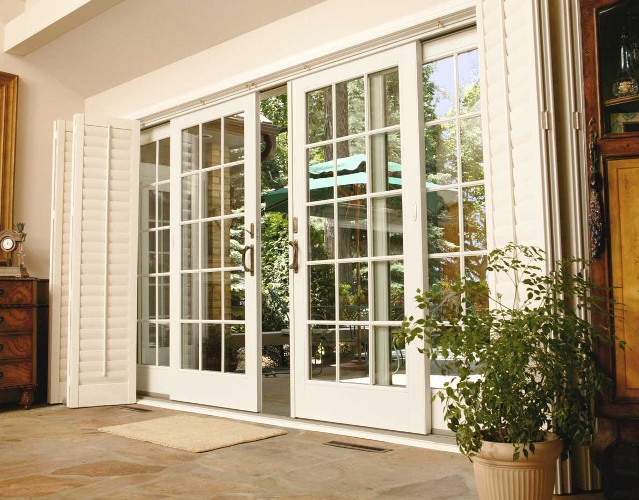
For a front door that faces weather and greets every visitor, fiberglass usually earns its keep. You can see our styles on the doors page. If the back of the house needs work too, look at our sliding patio doors and French doors.
Frequently Asked Questions
Is a fiberglass door more energy efficient than a steel door?
Not by much. Insulated steel and fiberglass doors both use foam cores and land around R-5 to R-6 without glass. The glass, weatherstripping and installation matter more than the skin.
Will a steel door rust in New Hampshire?
It can. Steel rusts where the paint is scratched, and salty splashback from a treated walkway speeds that up. Fiberglass does not rust.
Can I paint a fiberglass door?
Yes. Smooth fiberglass doors such as Therma-Tru’s Smooth-Star arrive ready to paint. Harvey also offers factory paint and stain finishes with a 10-year finish warranty.
Which entry doors does The Window Source install?
We install Harvey fiberglass entry doors in Traditional, Craftsman and Modern styles. Therma-Tru Smooth-Star fiberglass doors are available on request.
How much does a new fiberglass entry door cost?
We don’t publish door prices, because style, glass, finish, hardware and the condition of the opening all change the number. Your exact price comes from the free in-home quote, in writing.
The easiest way to settle fiberglass vs steel for your house is to have someone look at the opening. Skip, Andrea or Gary will set up a free in-home measure, and you’ll get a written door quote with no pressure. Call (603) 764-7212, Monday to Friday 8:00 to 5:00, or use the form below. We usually call back within one business day.
Sources
- Therma-Tru: Safety and Security
- Therma-Tru: Smooth-Star Collection
- Therma-Tru: Traditions Steel Collection
- Therma-Tru: FAQs
- Therma-Tru: Why Fiberglass Doors Outperform Wood and Steel
- Harvey Windows + Doors: Entry Doors
- Harvey Windows + Doors: Traditional Entry Doors
- Harvey Windows + Doors: 4 Reasons to Choose Harvey Entry Doors
- U.S. Department of Energy: Energy Saver Guide (2022)
- ENERGY STAR: Residential Windows, Doors and Skylights Key Product Criteria
- Green Building Advisor (Martin Holladay): All About Doors
Header photo courtesy of Therma-Tru Doors.